A singularity, not a stress.
The biggest number on the screen rose 270.7 → 343.2 → 491.7 MPa as the mesh got finer. I checked the spline by hand instead (FoS 3.4) and put the fix, an R0.5 run-out, on the drawing.
Once by hand, once in ANSYS. When the two disagree, I stop and find out why before moving on. I'm a mechanical engineering student in Lagos, working towards transmission and chassis design.
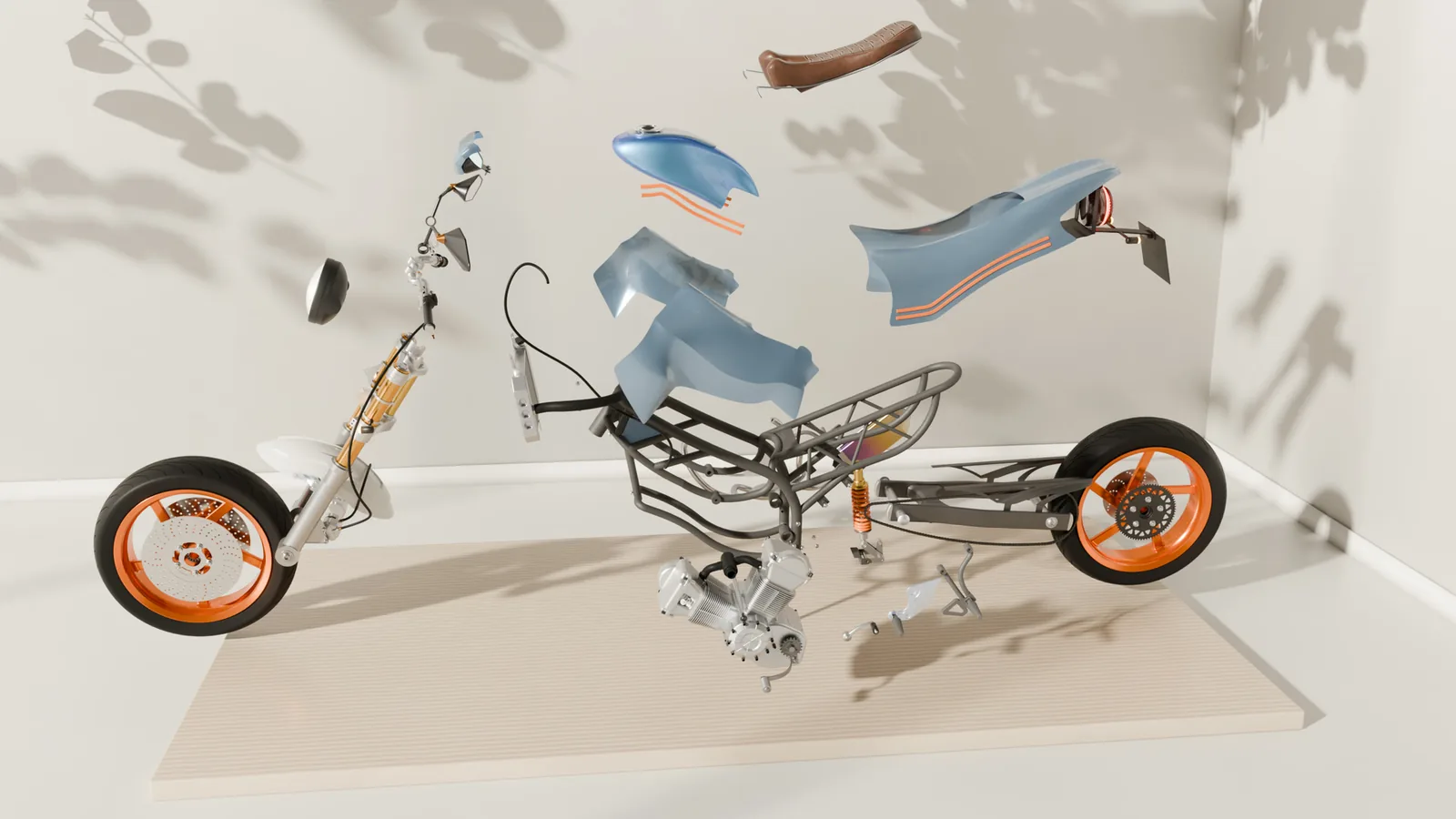
Café Racer Concept · 217 parts · SolidWorks → ANSYS → Blender
Selected work
Each one is treated as if it had to be built: find the loads, analyse it, fix what fails, and plan how it would be made.
A complete motorcycle modelled part by part, a frame redesigned until it passed, two parts planned for manufacture, and a 70-second product film.
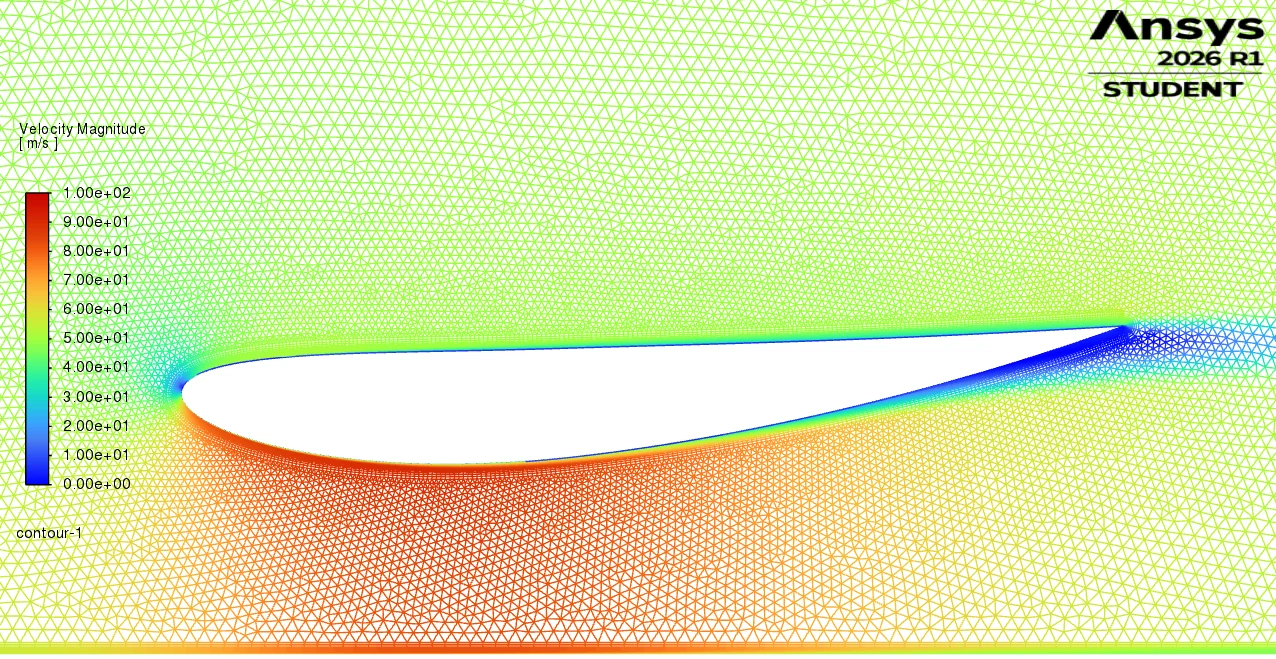
One wing, eleven ride heights, 180 km/h: where downforce peaks, why it stalls, and the ride height I would actually set.
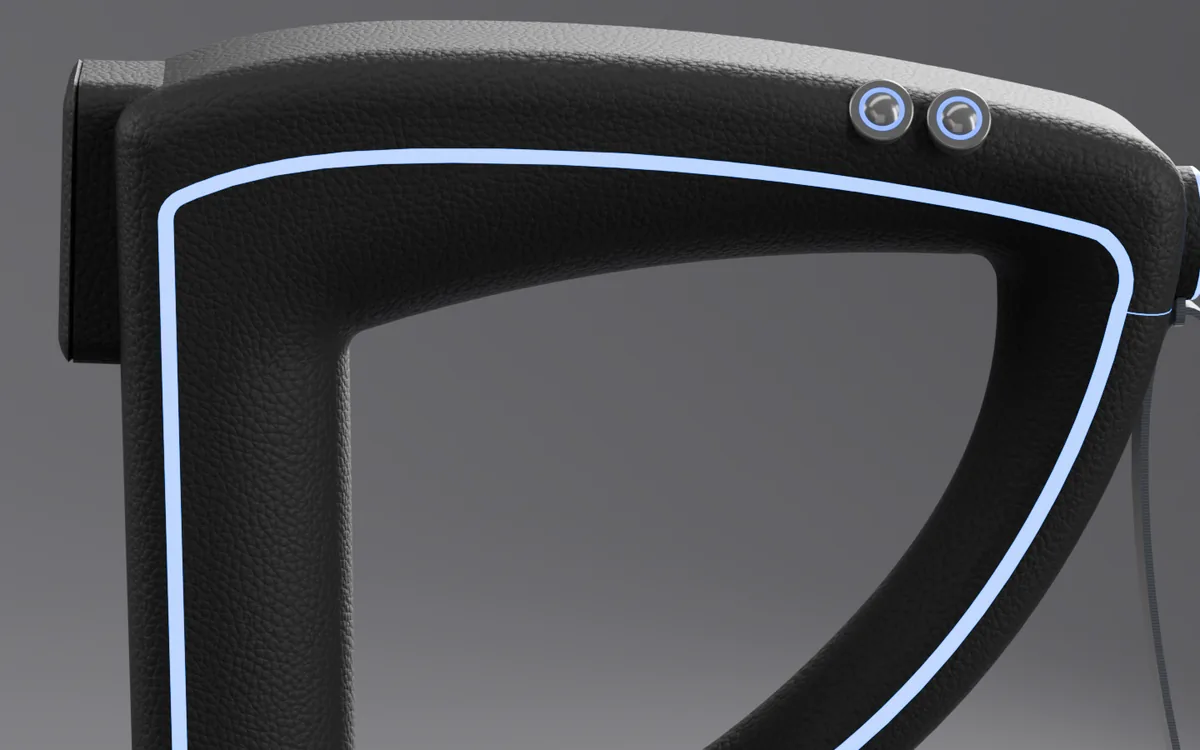
A smart navigation cane built by a four-person team. I lead the electronics and embedded side; the product film is in progress.
Joint torques sized from first principles (J2 56.6 N·m, J3 28.1 N·m) and a column-mounted turret for the J1 to J3 drive.
Method
A stress plot is easy to produce and easy to believe. These are the checks from the café racer study, hand calculation against ANSYS.
| Check | By hand | ANSYS | Difference |
|---|---|---|---|
| Swingarm, shock-link reaction | 23 295 N | 23 296 N | 1 N |
| Swingarm, pivot reaction | 17 825 N | 17 826 N | 1 N |
| Output shaft, bearing A | 2 224 N | 2 289.8 N | 3.0% |
| Output shaft, bearing B | 2 782 N | 2 848.5 N | 2.4% |
| Output shaft, Ø16 neck stress | 183.5 MPa | 206.1 MPa | +12%, shoulder Kt |
What the second check caught
The biggest number on the screen rose 270.7 → 343.2 → 491.7 MPa as the mesh got finer. I checked the spline by hand instead (FoS 3.4) and put the fix, an R0.5 run-out, on the drawing.
The first swingarm runs gave a 4.8 m deflection, then a link force of 18 992 N against 23 295 N by hand. Modelling both holes as true pins brought the reactions to within 1 N.
The link lever arm measured 119.28 mm, not the 159 mm I had assumed. Every linkage force rose 33%, the frame failed again at 550.5 MPa, and four targeted changes brought it back to FoS 1.14.
About
I'm Micheal, in year three of a five-year mechanical engineering degree at the University of Lagos. Before university I spent six months as a mechanic's apprentice at D'leye Automobile.
Alongside the degree I run CADmint, a CAD and simulation service, and Panoptes, an aerial photography and survey business. I also teach SolidWorks to other students in the faculty.