Front wing in ground effect
An F1 front wing runs centimetres off the road, where ground effect can add downforce or suddenly take it away. I mapped how downforce, drag and the flow change with ride height for a single wing element, and turned that into a ride-height recommendation.
- Sweep
- 11 ride heights, 250 → 15 mm
- Peak
- +47% downforce at a 44 mm gap
- Then
- −16% downforce, 4.5× drag by 15 mm
- Tools
- ANSYS Fluent · 2D RANS, k-ω SST
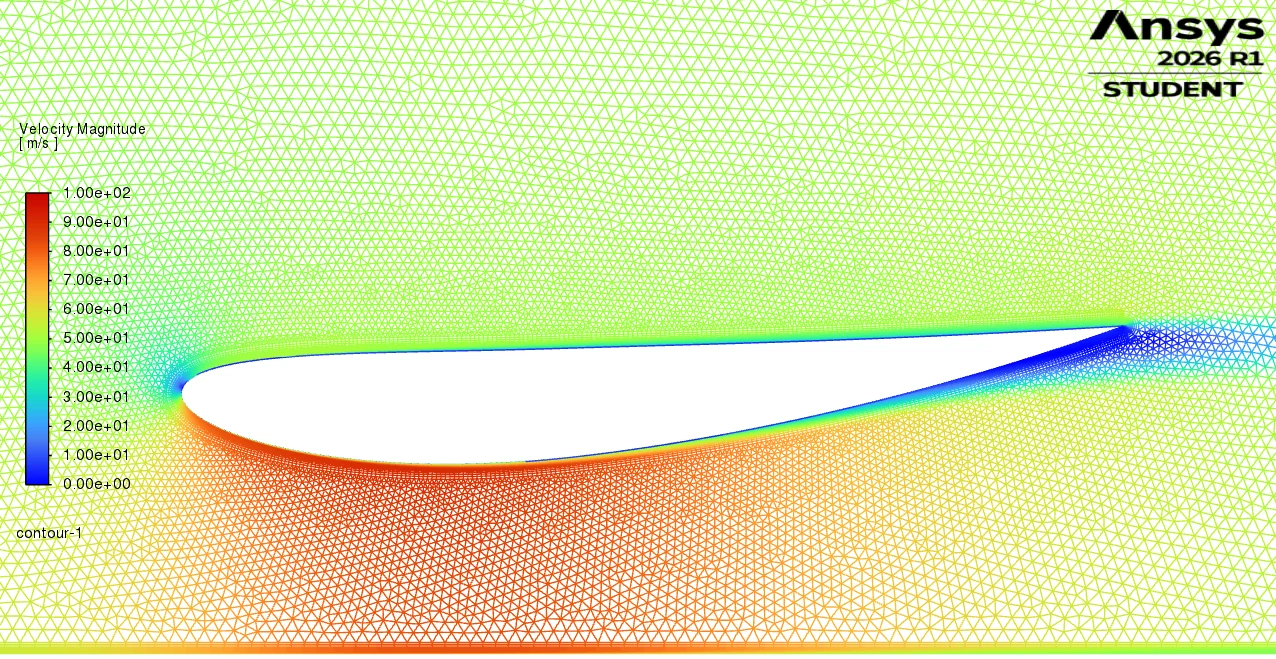
Validate first, then sweep.
| Wing | NACA 4412, inverted, chord 250 mm, 4° incidence |
| Flow | 50 m/s, Re = 8.6 × 10⁵, moving ground |
| Model | Steady RANS, k-ω SST, coupled, 2nd order |
| Mesh | 107 000–148 000 cells, 25 prism layers |
| Sweep | h/c 1.0 → 0.06, 11 cases, residuals 1e-5 |
| Validation, h/c 1.0 | CFD | Reference |
|---|---|---|
| Downforce CL | 0.902 | 0.875–0.915 |
| Drag CD | 0.0152 | 0.0135 (turbulent) |
| Wall y+ on wing | ≤ 1.8 | ≈ 1 for SST |

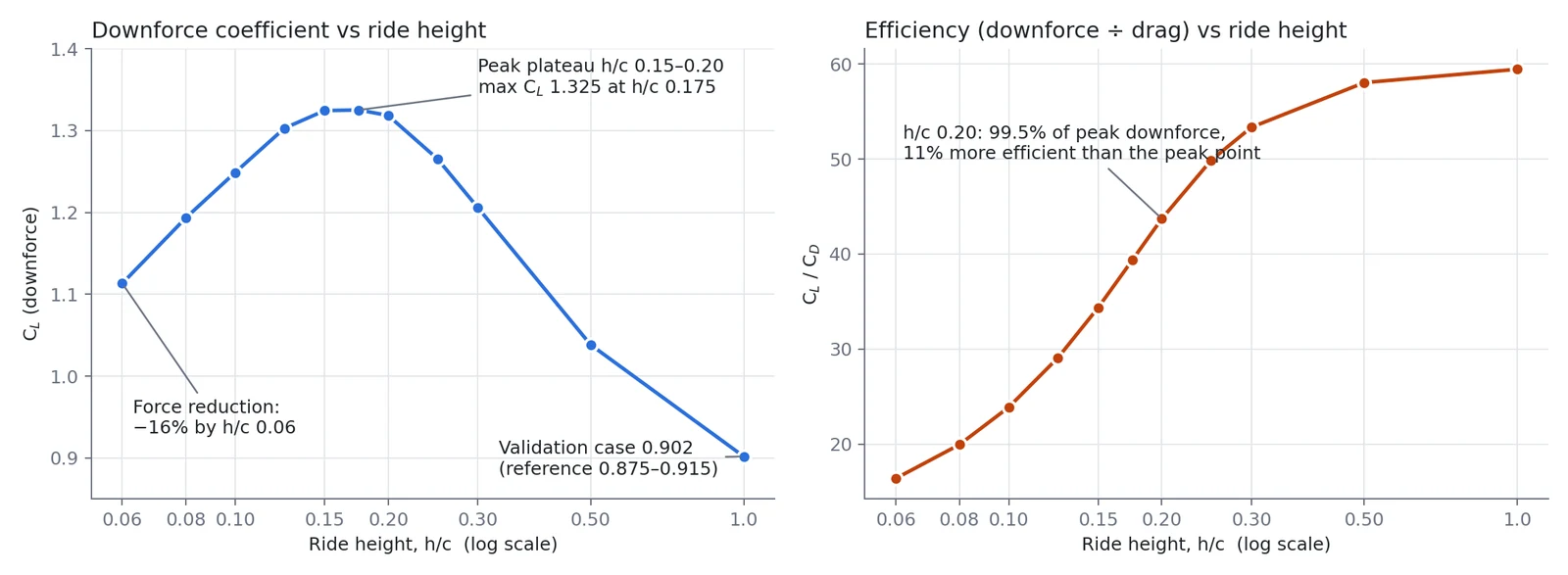
Downforce climbs, plateaus, then falls.
Why it stalls
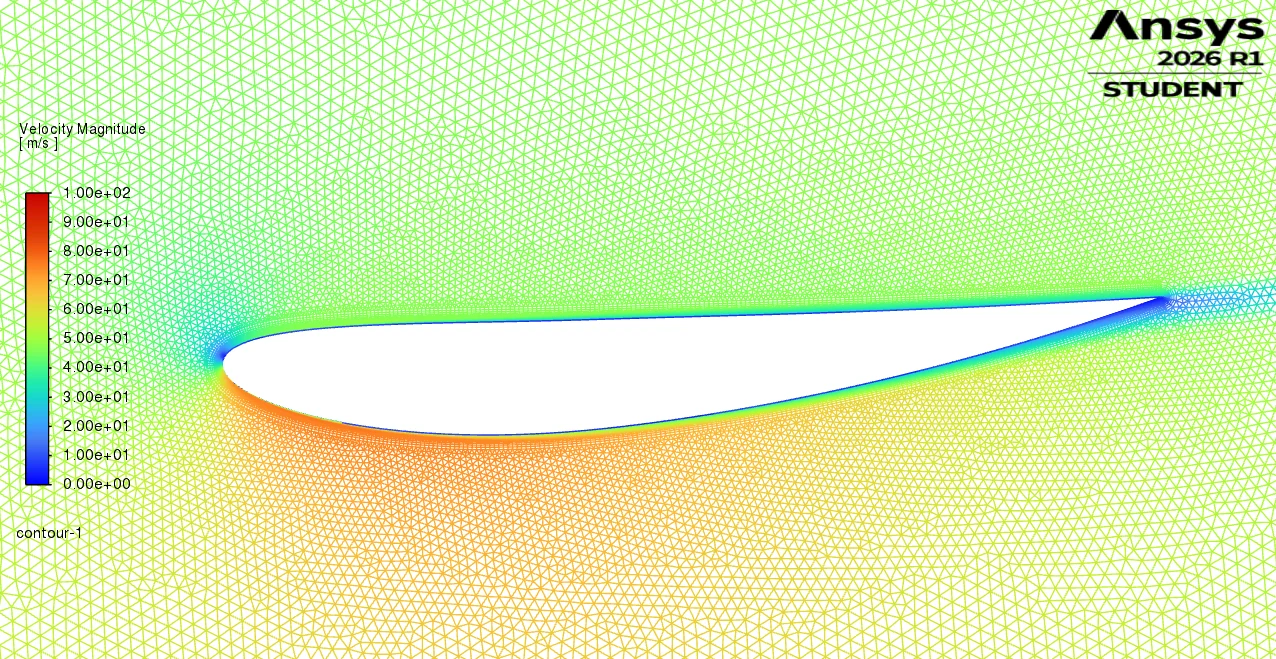
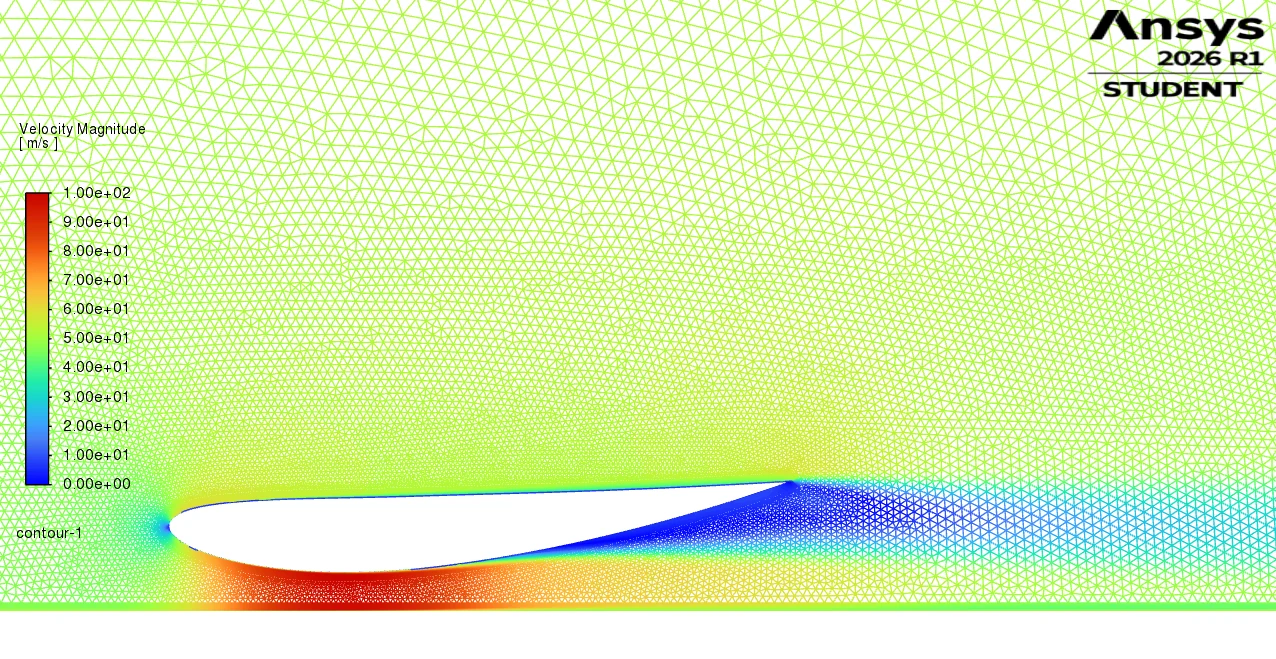
Closing the gap speeds up the air under the wing, which adds suction. But the air then has to slow back down before the trailing edge, and the tighter the gap, the harder that recovery. Below about 44 mm the separated zone grows faster than the gap suction, so downforce falls and drag climbs.
| h/c | Separates at | CL | CL / CD |
|---|---|---|---|
| 1.00 | none | 0.902 | 59.4 |
| 0.20 | 82% chord | 1.319 | 43.7 |
| 0.06 | 57% chord | 1.113 | 16.4 |
Set the wing at 50 mm, not at the peak.
At h/c 0.20 the wing makes 99.5% of maximum downforce with 11% better efficiency, and keeps 6 mm of margin before heave or braking pitch push it onto the falling side, where downforce drops as the car sinks. That loop is the same physics behind porpoising.